
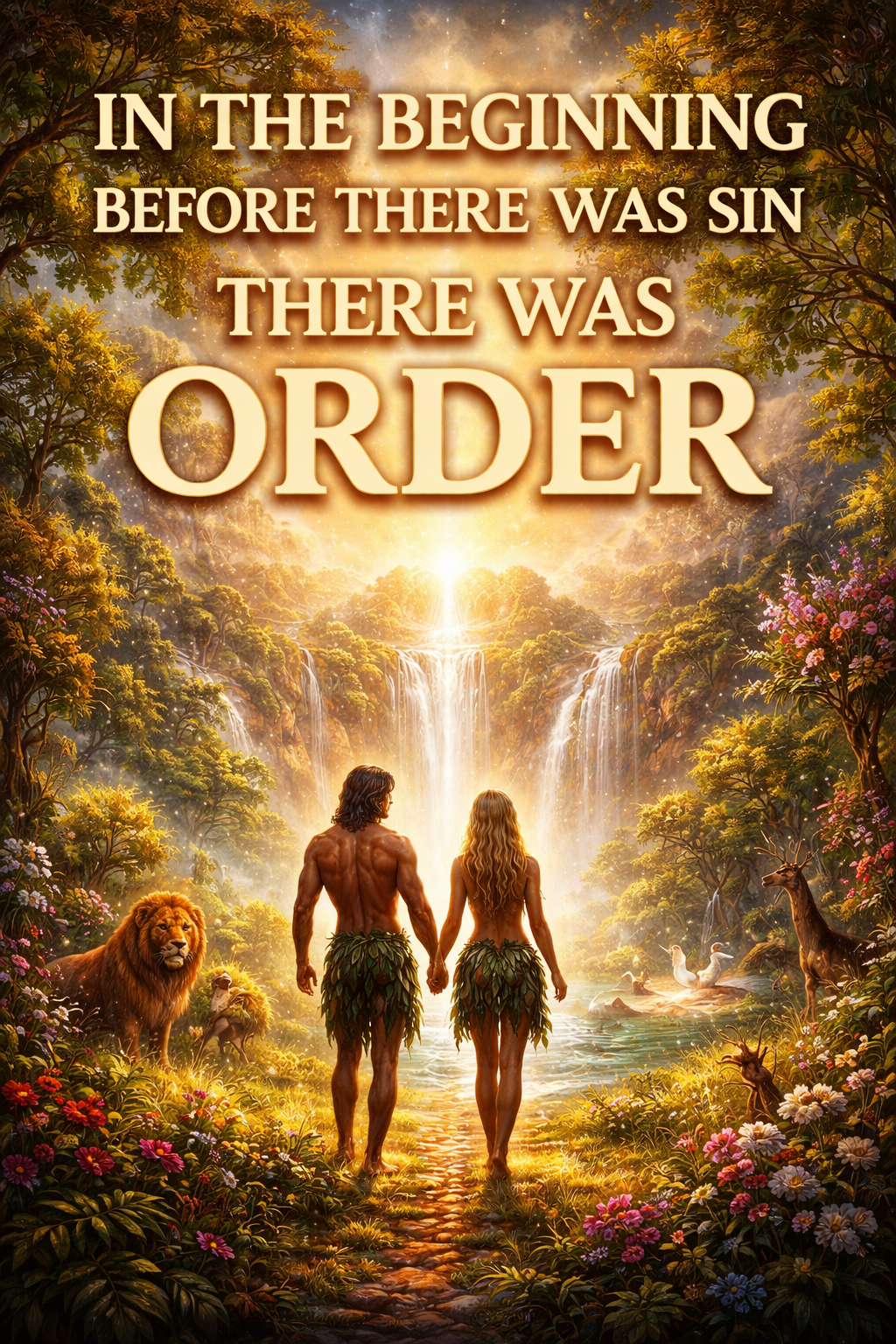
In the beginning, Elohim spoke, and the universe obeyed. Light burst forth at His command, time took its first breath, and creation aligned itself to divine order. Nothing was accidental. Nothing was chaotic. Everything had meaning.
Before Sinai. Before tablets of stone. Before thunder and fire on a mountain. There was law.
The Ten Commandments did not begin at Sinai. Sinai only engraved what already existed. Sin is only possible where law exists. Death reigned from Adam onward because Adam transgressed a command. That alone tells us law was already in force (Romans 5:13 to 14).
In the beginning, man was given a diet of peace. Herbs and fruits were placed freely in his hands. Behold, I have given you every herb bearing seed and every tree in which is the fruit of a tree yielding seed to you it shall be for food (Genesis 1:29). Violence had no place in Eden. Blood had not yet cried from the ground.
Yet Abel was a shepherd. He kept flocks. This quietly tells us that animal use existed very early, even if meat consumption was not yet the norm. The seeds of later practices were already present.
Then comes Noah. As the flood approached, Elohim made a distinction that shocks those who think law began late. Clean and unclean animals were already known. Noah was instructed to take them separately, by number and by kind (Genesis 7:2). No Sinai. No written Torah. Yet the distinction existed. Heaven has always known the difference.
Now to Eden itself.
Elohim planted a garden eastward, a place of beauty, provision, and fellowship. From that garden flowed four rivers. Two of them still whisper their ancient names to us today, Euphrates and Tigris, running through lands we know, Turkey, Syria, Iraq, and Iran. The other two, Pishon and Gihon, seem lost to history, altered or erased by the catastrophic changes that followed the Flood. Eden was real. Grounded. Located. Not a myth floating in abstraction.
In that garden, Adam was given abundance with one boundary. Of every tree of the garden thou mayest freely eat but of the tree of the knowledge of good and evil thou shalt not eat of it (Genesis 2:16 to 17). Freedom, yes, but freedom with limits. Love always has boundaries.
It is critical to notice this. Adam alone received this command. Eve was not yet formed. She later learned of the restriction second hand, through Adam.
Both Adam and Eve were created on the sixth day. Then came the seventh. They rested with Elohim. He blessed the day. He sanctified it. He set it apart (Genesis 2:2 to 3). He did not yet name it Sabbath, but He established its essence, rest, holiness, communion. The pattern was planted before sin ever entered the world.
Then the serpent came.
Not crude. Not obvious. But subtle. Ancient. Intelligent. The serpent who is also called the Devil, Satan, the Dragon did not begin with a lie. He began with a question. He mixed truth with distortion. That is always his method.
Eve knew eating was forbidden. But touching? That detail was not part of the original command. Somewhere between Adam’s instruction and Eve’s understanding, the word shifted. A small crack. Enough for deception to enter.
Genesis 3:6 opens the human heart with terrifying clarity. The fruit appealed to her flesh. It was good for food. It appealed to her eyes. It was pleasant to behold. It appealed to her pride. It promised wisdom. Lust of the flesh. Lust of the eyes. Pride of life. The same three weapons still used today (1 John 2:16).
She ate. Then she gave to Adam.
And Adam ate.
No resistance. No protest. No appeal to Elohim. He ate fully. The idea that he choked and that this created an Adam’s apple is fiction. Anatomically, the so called Adam’s apple is simply the laryngeal prominence, more visible in males due to hormonal changes at puberty. The fall was not a choking accident. It was a conscious act of disobedience.
Because of this, consequences followed. Pain entered childbirth. Authority structures shifted. The harmony of Eden fractured. Death stepped onto the stage of human history. By one man sin entered into the world, and death by sin (Romans 5:12).
Yet the story does not end in tragedy.
Where the first Adam failed, the second Adam prevailed.
The Messiah came, not in a garden of abundance, but into a wilderness of hunger. He faced the same enemy. The same tactics. The same three temptations.
Turn stones to bread, lust of the flesh.
Prove Yourself, pride of life.
Take the kingdoms of the world, lust of the eyes.
Each time, He answered the serpent the same way. It is written. He stood on the Word. He did not negotiate. He did not explain. He obeyed.
The first Adam brought death by disobedience.
The second Adam brought life by obedience.
The first Adam fell in a perfect garden.
The second Adam triumphed in a barren wilderness.
And the story continues.
From Eden to the cross.
From law to grace.
From death to life.
Not a myth.
Not a fairy tale.
But a divine narrative calling humanity back to what was lost and forward to what is promised.
Those who have ears to hear, let them hear.
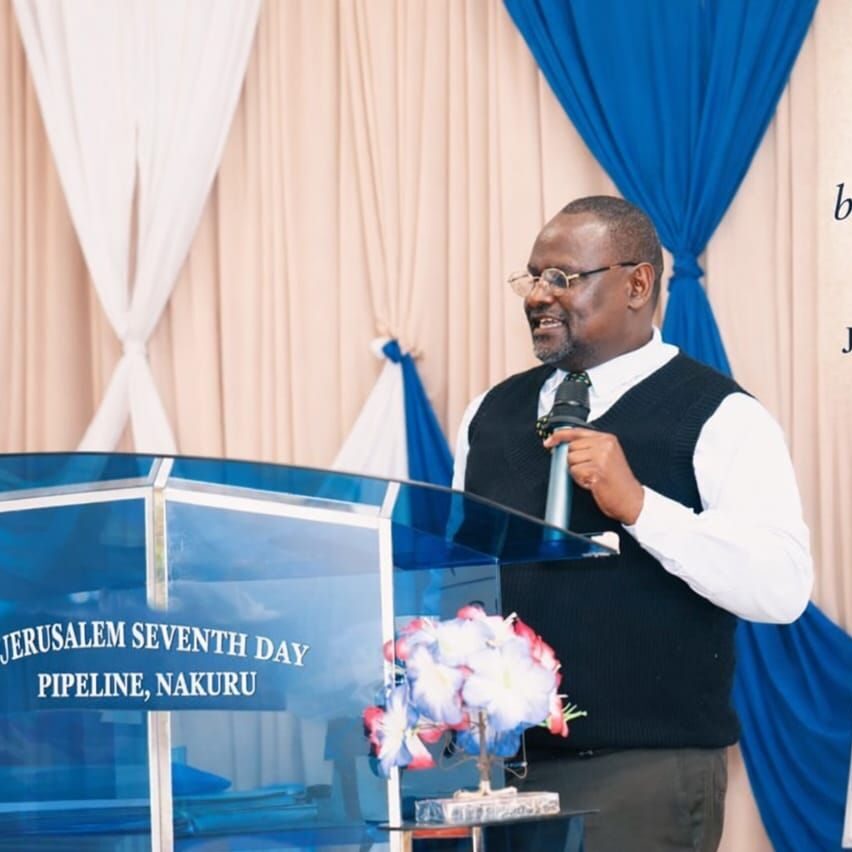
This Post has been prepared by
Bro Mutonga (Pipeline Church, Nakuru, Kenya, East Africa, Africa)
babakevi@gmail.com
+254722808047
Permission granted to freely share it widely in whatever form (Matthew 10:8)
*****