
Isaiah 65 and Life in the Messianic Kingdom: Resolving the Resurrection Question
One of the most thought-provoking prophetic questions in Scripture arises when we compare the words of Jesus with the prophecies of Isaiah. Jesus clearly taught that “in the resurrection they neither marry, nor are given in marriage” (Matthew 22:30). Yet Isaiah 65 describes a future era where people build houses, plant vineyards, enjoy long lives, and even have offspring. How do we reconcile these passages without contradicting Scripture?
The answer lies in rightly dividing the prophetic timeline and understanding the nature of the Messiah’s 1000-year reign on earth.
Isaiah 65 Is Not the Eternal State
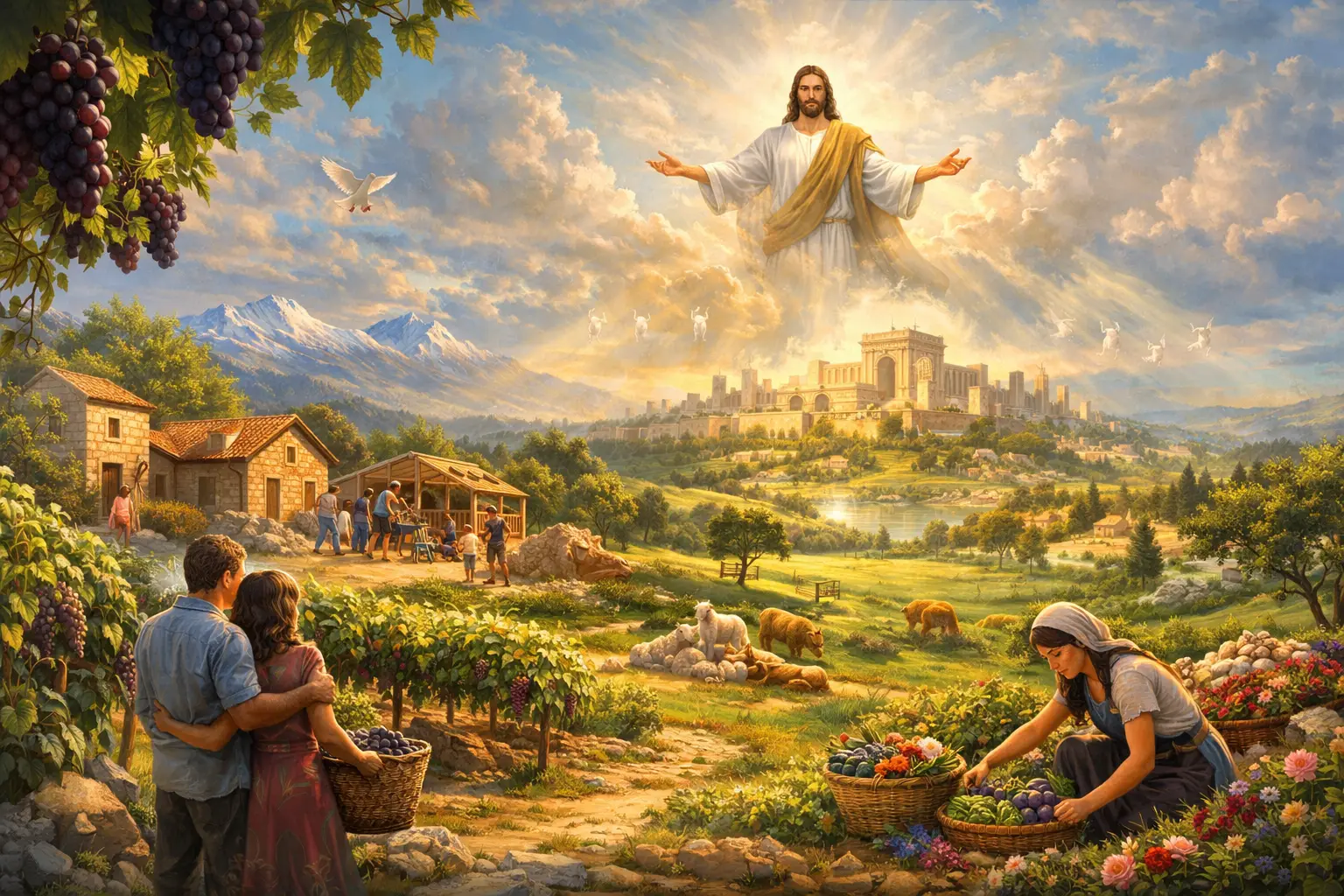
Isaiah 65 does not describe the final eternal state (the New Heaven and New Earth of Revelation 21–22). Instead, it points to the Messianic Kingdom on earth, commonly referred to as the Millennial Reign of Messiah. This is a literal, physical reign of Christ on earth following His return.
Several clues confirm this:
- People build houses and inhabit them
- They plant vineyards and eat the fruit
- Lifespans are dramatically extended (“as the days of a tree”)
- Death is still possible (Isaiah 65:20)
These conditions cannot describe the eternal state, where death is abolished completely. Therefore, Isaiah 65 fits squarely within the Millennium, not eternity.
Two Groups of People in the Millennium
The key to understanding Isaiah 65 is recognizing that two distinct groups of people exist during the Messianic reign:
- Resurrected, glorified saints
- Mortal human beings who survive the tribulation and enter the Kingdom in the flesh
Jesus’ statement in Matthew 22:30 applies only to resurrected, glorified bodies. These individuals are immortal, do not marry, and do not reproduce. However, Isaiah 65 is largely describing the experience of mortal humans living under Messiah’s righteous rule.
“My People” and “My Elect”
Isaiah 65:22–23 states:
“For as the days of a tree are the days of MY PEOPLE, and MINE ELECT shall long enjoy the work of their hands.”
This language highlights covenant blessing, stability, and divine protection. Unlike past ages where conquest and exile robbed people of their labor, the Messianic Kingdom restores justice, permanence, and reward. No one will build for another to take. No one will plant only to lose the harvest. This is the reversal of the curse.
Offspring Without Contradiction
Isaiah explicitly says:
“They shall not labour in vain, nor bring forth for trouble; for they are the seed of the blessed of the LORD, and their offspring with them.”
This does not contradict Matthew 22:30 because:
- These offspring come from mortal believers
- Marriage and childbirth continue among the nations
- The resurrected saints rule with Messiah but do not reproduce
Thus, the Kingdom includes generational continuity among mortals, all under the righteous governance of Christ.
Divine Nearness and Instant Answered Prayer
Isaiah 65:24 declares:
“Before they call, I will answer; and while they are yet speaking, I will hear.”
This describes an unprecedented intimacy between God and humanity. Messiah reigns visibly, justice is immediate, prayer is unhindered, and divine response is swift. This is covenant restoration at its highest earthly expression.
Conclusion: Harmony, Not Contradiction
When Scripture is allowed to interpret Scripture, Isaiah 65 and Matthew 22 are not in conflict—they address different groups and different conditions within God’s redemptive plan. The resurrection changes the nature of glorified saints, but the Messianic Kingdom also includes redeemed mortals living under divine order.
Isaiah 65 paints a powerful picture of restored creation, rewarded labor, righteous generations, and intimate fellowship with God—all under the reign of Messiah. Far from confusion, it reveals the breathtaking structure of God’s Kingdom plan.